
The first (and only) time I got lost on a mountain
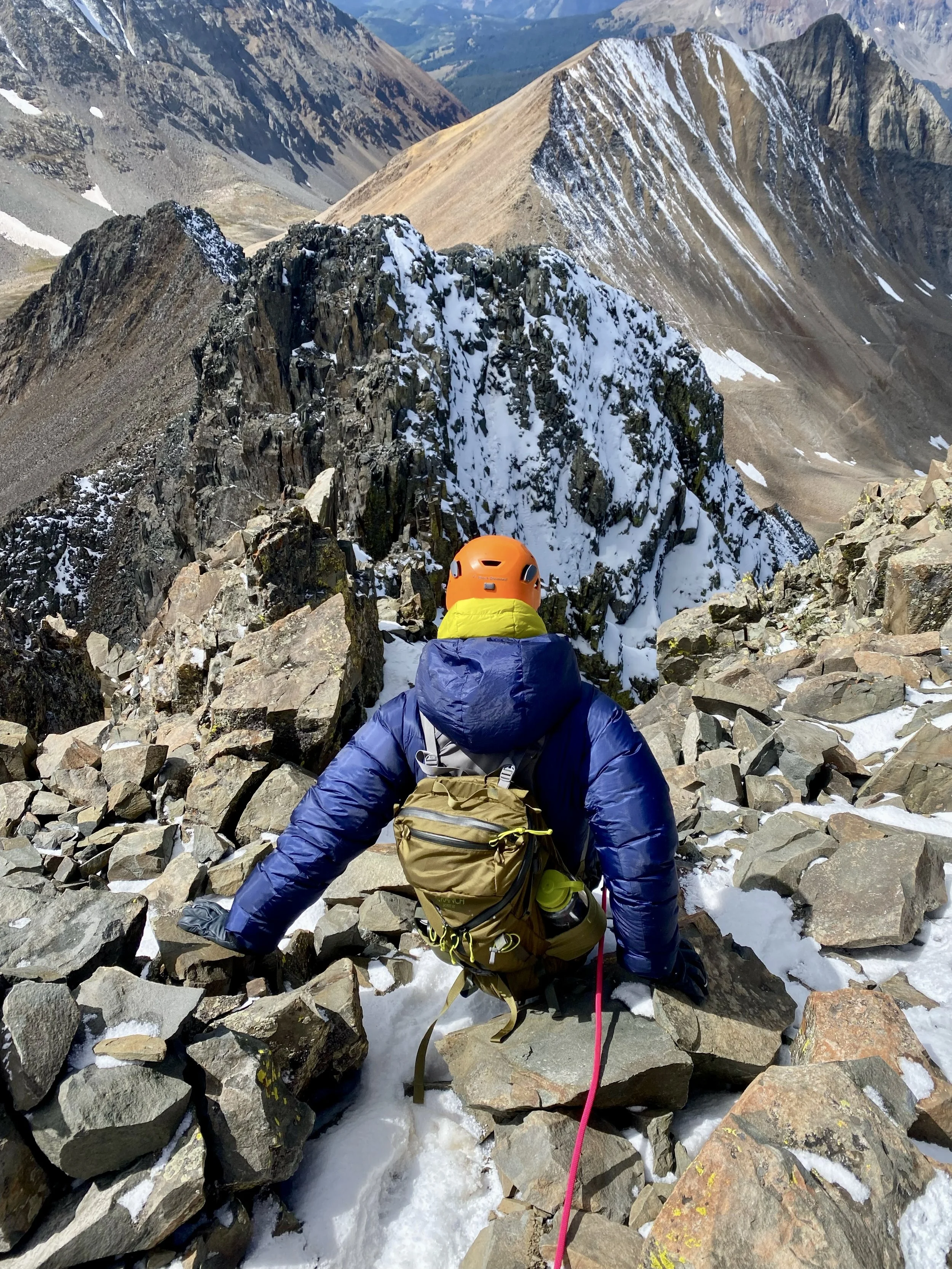
At 32, I was running on fumes after a decade on Wall Street—burned out, anxious, and convinced I knew what “success” looked like. My life was conference calls, spreadsheets, and red-eye flights. Then came an invitation: a long weekend in Colorado.
I laced up my sneakers and joined a few friends to climb Mount Silverheels, a 13,829-foot peak outside of Fairplay, Colorado. Nobody checked the weather. Nobody brought a map. We figured—as thirty-year-olds—we were fit. Plus, we were motivated, and frankly, we thought that was enough.
Halfway up, three of the group turned back. Smart. A doctor friend and I pressed on—driven, competitive, type-A to the bone. We told ourselves we were the serious ones. The committed ones. Looking back, we were just the overconfident ones.
When we reached the summit at sunset, we high-fived and felt genuinely invincible—right up until we looked around and realized we had absolutely no idea how to get down. No map. No light. No plan. Just confidence. And as it turns out, confidence doesn't illuminate a trail in the dark.
We wandered for hours. The mountain, indifferent to our credentials and our conviction, offered nothing in return for our certainty. We eventually stumbled onto a group of drunk campers, bartered for a ride out, and made it back to civilization somewhere around 4:00 am, embarrassed and filthy and more than a little humbled.
I felt like an idiot. But I also felt something I hadn't felt in years: awake.
Here's what that night taught me that no promotion ever had—confidence is not the same as competence, and momentum is not the same as direction.
There's a well-documented phenomenon in psychology called overconfidence bias—our near-universal tendency to overestimate the accuracy of our own knowledge and judgment. Studies consistently show that when people say they are "90% certain" about something, they're actually correct only about 70% of the time. We are, as a species, reliably worse at knowing what we don't know than we are at knowing what we do. The more experienced we become in one domain, the more we unconsciously assume that expertise travels—that the skills and instincts that made us successful in one arena will translate cleanly to the next mountain we decide to climb.
They don't. Not automatically. Not without a map.
By that point, I had been operating exactly like this for a decade in my professional life—scaling a single career mountain with the same blind certainty my doctor friend and I brought to Mt. Silverheels. Moving fast. Trusting my gut. Mistaking hustle for navigation. And here's the part that's hardest to admit: I wasn't even sure I was on the right mountain. I was just good at climbing. There's a seductive comfort in forward motion, in the burn of effort, in feeling busy, in the belief that you're gaining elevation. It quiets the deeper question, the one you don't want to ask while you're mid-stride: Is this actually where I want to go?
Most high-achievers I know—and I spent three decades surrounded by them on Wall Street—are extraordinary climbers. Disciplined, resilient, relentlessly capable. What they are less good at is pausing, early enough to matter, and asking whether the peak they're grinding toward is actually their peak. They confuse the clarity of a goal with the wisdom of the goal itself. They've picked a mountain—a title, a number, a version of success assembled from other people's expectations—and they've committed so fully to the climb that stopping to question it feels like weakness, or worse, failure.
Getting lost in the Rockies showed me what real success actually demands: humility, situational awareness, and the willingness to stop mid-climb, admit you're off course, and find your way back with intention rather than inertia.
Harsh reality: most people aren't failing. They're climbing the wrong mountain—and climbing it with complete confidence.
That's the cruelest version of the trap. Because you can be excellent at the wrong thing for a very long time. You can accumulate all the external markers of success—the altitude, the view, the validation of everyone watching from below—and still arrive at a summit that doesn't belong to you. Still look around in the dark and realize you have no idea where you are.
The sneakers-and-no-map version of me learned that lesson in one night. The professional version took considerably longer. But the lesson was the same: before you commit to the climb, make sure you know which mountain you're on—and why.